

What Is a Multi-Agent AI Workflow for Affiliate Publishing?
A multi-agent AI workflow for affiliate publishing is a coordinated content production system where multiple specialized AI agents independently perform research, keyword analysis, search intent mapping, content planning, writing, editing, optimization, quality assurance, publishing, and performance monitoring. Instead of relying on a single AI model to complete every task, each agent focuses on a specific responsibility while continuously sharing information with other agents. This creates a faster, more consistent, scalable, and data-driven publishing process that improves content quality, operational efficiency, and long-term publishing performance.
Affiliate publishing has evolved from writing individual articles into managing thousands of interconnected pages across multiple categories. Modern affiliate websites must consistently publish accurate content, update existing articles, maintain internal linking structures, monitor search performance, compare competitors, and adapt to changing user behavior. Performing these activities manually becomes increasingly difficult as websites expand. A multi-agent workflow addresses this challenge by distributing responsibilities among specialized AI agents that collaborate toward a common publishing objective.
Why Are Multi-Agent AI Systems Transforming Affiliate Publishing?
The primary advantage of multi-agent workflows is specialization. A single AI system attempting to complete every publishing task often produces inconsistent quality because research, analysis, writing, editing, and optimization require different reasoning patterns. Dividing these responsibilities among specialized agents enables each one to focus on solving a narrower problem with greater accuracy.
Consider a website publishing 300 affiliate articles each month. A traditional workflow might require one editor to research topics, identify keywords, write content, optimize headings, add internal links, check factual accuracy, publish the article, and later monitor rankings. As content volume grows, maintaining quality becomes increasingly difficult.
A multi-agent workflow distributes these responsibilities across dedicated agents:
| Agent | Primary Responsibility | Output |
|---|---|---|
| Research Agent | Collects market data and identifies opportunities | Research reports |
| Search Intent Agent | Maps user intent and search behavior | Intent clusters |
| Keyword Agent | Builds semantic keyword relationships | Keyword framework |
| Content Planner | Creates article architecture | Detailed content brief |
| Writer Agent | Produces draft content | Initial article |
| Editor Agent | Improves clarity and consistency | Edited article |
| Fact Verification Agent | Validates factual accuracy | Verified content |
| Internal Linking Agent | Connects related pages | Link recommendations |
| Publishing Agent | Formats and publishes content | Published page |
| Analytics Agent | Tracks performance metrics | Performance dashboard |
Instead of working sequentially without communication, these agents continuously exchange structured information. For example, if the analytics agent discovers declining traffic for comparison articles, the planning agent can prioritize similar topics for improvement while the research agent identifies new competitor strategies influencing market behavior.
This collaborative architecture allows affiliate publishers to increase publishing speed without sacrificing consistency.
Another significant advantage is decision quality. Specialized agents evaluate data from multiple perspectives simultaneously. While a keyword agent focuses on semantic relationships, a search intent agent evaluates user expectations, and an analytics agent monitors historical performance. Combining these viewpoints results in more informed publishing decisions than relying on isolated analysis.
How Does a Multi-Agent AI Workflow Operate From Research to Publishing?
A successful workflow functions as a continuous publishing pipeline rather than a collection of disconnected automation tools. Each stage receives structured information from previous agents while generating new intelligence for subsequent stages.
The process typically follows six interconnected phases.
Phase 1: Opportunity Discovery
Everything begins with identifying publishing opportunities rather than selecting random keywords. The research agent continuously analyzes emerging product categories, seasonal trends, search demand patterns, pricing changes, consumer interests, and content gaps.
Rather than asking,
“What keyword should we target?”
the agent asks,
“Where does unmet user demand exist?”
This shift produces stronger publishing opportunities because it prioritizes information gaps instead of search volume alone.
For example:
- New software category launches
- Increasing demand for AI productivity tools
- Emerging financial products
- Seasonal buying behavior
- Recently updated product models
Each opportunity receives a priority score based on demand, competition, monetization potential, and long-term relevance.
Phase 2: Intent Mapping
After discovering opportunities, another agent classifies search intent.
Different users require different information depending on their stage in the purchasing journey.
Typical intent categories include:
- Informational
- Commercial Investigation
- Transactional
- Comparative
- Problem-solving
- Educational
Suppose someone searches:
“Best wireless gaming mouse for FPS.”
This indicates commercial investigation rather than informational learning.
The article structure, product comparisons, evaluation criteria, and buying recommendations should therefore match this intent. Intent alignment significantly improves publishing relevance because the content answers the actual question users want solved.
Phase 3: Content Planning
Once user intent is understood, the planning agent creates a structured blueprint.
Instead of simply generating headings, it determines:
- Entity relationships
- Required explanations
- Logical information hierarchy
- User objections
- Supporting comparisons
- Tables
- Frequently asked questions
- Missing competitor coverage
- Internal linking opportunities
The planner also estimates article depth.
For example:
| Topic Complexity | Suggested Word Count |
|---|---|
| Basic Definition | 900–1200 |
| Product Comparison | 1800–2500 |
| Technical Framework | 2500–4000 |
| Enterprise Strategy | 3500+ |
Rather than maximizing length, the objective is maximizing information density.
Every section should answer a distinct user question while contributing toward the overall publishing goal.
Phase 4: Content Creation
The writer agent transforms structured plans into complete articles.
Unlike conventional AI writing, the writer does not begin with a blank prompt.
Instead, it receives:
- Research findings
- Search intent
- Target entities
- Required explanations
- Competitor coverage gaps
- Internal link opportunities
- Editorial rules
- Style guidelines
- Readability objectives
Because the planning stage already solved structural decisions, the writer concentrates entirely on producing coherent, informative content.
This separation dramatically improves consistency across hundreds or thousands of articles.
Phase 5: Editorial Validation
Publishing without verification creates long-term quality issues. An editorial agent performs several validation checks before approval.
Typical review areas include:
- Logical consistency
- Grammar
- Duplicate information
- Unsupported claims
- Missing explanations
- Entity completeness
- Readability
- Formatting
- Table quality
- Heading hierarchy
Instead of rewriting entire articles, the editor improves weak sections while preserving author intent.This approach reduces unnecessary content variation across the website.
Phase 6: Continuous Learning
The publishing process does not end after an article goes live.
Performance agents continuously monitor:
- Organic traffic
- Conversion rate
- Engagement
- Scroll depth
- Click behavior
- Revenue contribution
- Ranking movement
- Internal link performance
- Content freshness
Suppose an article originally converts at 3.5% but gradually declines to 2.1% over six months.The analytics agent identifies the decline. A research agent discovers newly released competing products.The planning agent updates the outline. The writing agent refreshes comparison sections.The publishing agent republishes the updated article.Instead of creating new content, the workflow strengthens existing assets through continuous optimization.
This feedback-driven cycle enables affiliate publishers to improve content performance over time rather than treating publishing as a one-time activity.
What Does the Complete Multi-Agent Publishing Architecture?
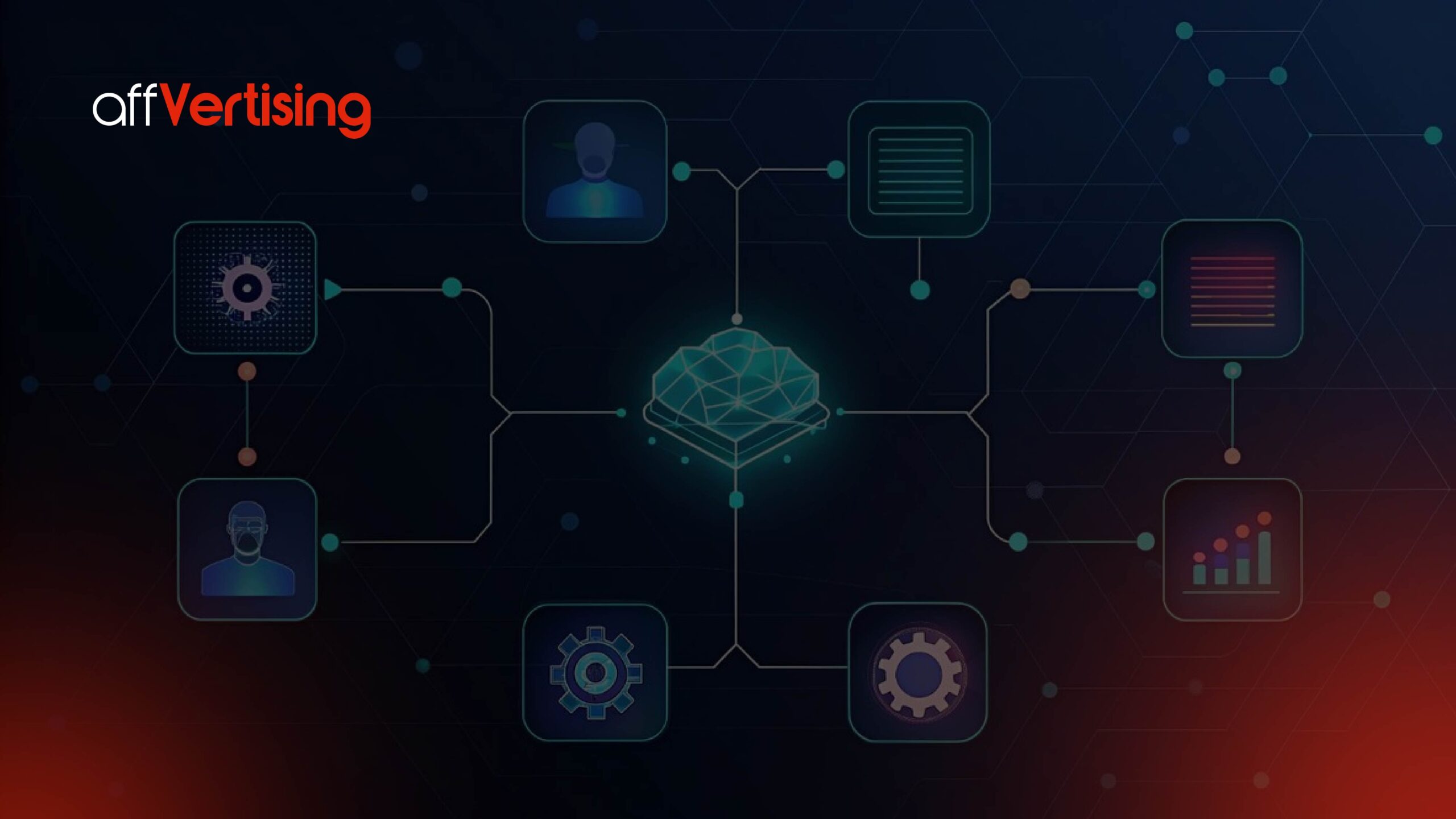
High-performing affiliate publishers rarely depend on one large AI model making every decision. Instead, they build an ecosystem of specialized agents connected through structured data flows. Each agent acts like a department within a publishing organization, receiving information, making decisions within its area of expertise, and passing enriched outputs to the next stage. This modular architecture improves scalability because individual agents can be upgraded or replaced without disrupting the entire workflow.
At the core of the architecture is a shared knowledge layer. This layer stores research findings, content briefs, entity definitions, editorial rules, product information, historical performance metrics, and publishing guidelines. Rather than repeatedly gathering the same information, every agent references this centralized knowledge base, ensuring consistency across thousands of articles.
A practical architecture typically includes four interconnected layers:
| Layer | Purpose | Typical Outputs |
|---|---|---|
| Intelligence Layer | Collects and organizes market knowledge | Research reports, entity maps, search intent clusters |
| Decision Layer | Prioritizes opportunities and plans content | Publishing roadmap, article briefs, content hierarchy |
| Production Layer | Creates, reviews, enriches, and formats content | Drafts, edited articles, comparison tables, internal links |
| Learning Layer | Measures results and improves future decisions | Performance insights, update recommendations, workflow adjustments |
This layered approach prevents information silos. When performance data reveals declining engagement for a category, the intelligence layer immediately receives that feedback, allowing future research and planning decisions to reflect real publishing outcomes rather than assumptions.
How Can You Implement a Multi-Agent AI Workflow at Scale?
Implementing a multi-agent workflow is not about adding more AI tools; it is about designing a repeatable publishing system where every agent has clearly defined responsibilities, standardized inputs, measurable outputs, and continuous communication with other agents. As content volume increases, the workflow should become more efficient rather than more complex.
A practical implementation framework can be organized into eight sequential stages.
| Stage | Primary Goal | Responsible Agent | Key Deliverable |
|---|---|---|---|
| 1 | Discover opportunities | Research Agent | Topic opportunities |
| 2 | Understand users | Intent Agent | Search intent map |
| 3 | Prioritize topics | Strategy Agent | Content roadmap |
| 4 | Design articles | Planning Agent | Content brief |
| 5 | Produce content | Writing & Editing Agents | Publication-ready article |
| 6 | Publish content | Publishing Agent | Live content |
| 7 | Measure performance | Analytics Agent | KPI dashboard |
| 8 | Improve continuously | Optimization Agent | Updated content |
Instead of treating publishing as a linear process, each completed stage feeds intelligence back into the beginning of the workflow. This creates a continuous improvement cycle where every published article contributes to better future decisions.
For example, if analytics reveal that comparison articles consistently outperform individual product reviews by 35% in affiliate conversions, the strategy agent can increase the priority of comparison-based content. The planning agent can then redesign future briefs to include more side-by-side evaluations, while the writing agent naturally adapts the structure without requiring manual intervention.
What Technologies and Tools Support Multi-Agent Affiliate Publishing?
Although the workflow is defined by collaboration rather than software, several categories of technologies make multi-agent systems more effective. The objective is to ensure that information flows seamlessly between agents while maintaining consistency, accuracy, and operational efficiency.
| Technology Category | Primary Purpose |
|---|---|
| Large Language Models | Generate reasoning, planning, and content |
| Knowledge Bases | Store reusable organizational knowledge |
| Vector Databases | Retrieve relevant contextual information |
| Workflow Orchestrators | Coordinate agent execution and task sequencing |
| APIs | Exchange information between systems |
| Content Management Systems | Publish and manage articles |
| Analytics Platforms | Monitor traffic, engagement, and conversions |
| Databases | Store publishing history and structured data |
| Automation Engines | Trigger repetitive publishing actions |
The most successful implementations avoid assigning every task to one model. Instead, specialized agents access shared resources, enabling consistent decisions while reducing redundant processing. A research agent, for instance, retrieves historical publishing data from the knowledge base, while the analytics agent updates that same repository with fresh performance metrics. This shared intelligence becomes increasingly valuable as the content library grows.
How Should Performance Be Measured?
Publishing hundreds or thousands of articles without measurement creates activity but not progress. A mature multi-agent workflow evaluates both operational efficiency and business outcomes using clearly defined key performance indicators.
The following KPIs provide a balanced view of workflow performance.
| KPI | Formula | Why It Matters |
|---|---|---|
| Content Production Speed | Articles Published ÷ Time | Measures workflow efficiency |
| Average Production Time | Total Hours ÷ Articles | Identifies operational bottlenecks |
| Content Update Frequency | Updated Articles ÷ Total Articles × 100 | Indicates content freshness |
| Organic Traffic Growth | ((Current Traffic − Previous Traffic) ÷ Previous Traffic) × 100 | Measures audience growth |
| Affiliate Conversion Rate | Affiliate Conversions ÷ Visitors × 100 | Evaluates monetization effectiveness |
| Revenue Per Article | Total Affiliate Revenue ÷ Published Articles | Assesses content profitability |
| Internal Link Coverage | Pages with Internal Links ÷ Total Pages × 100 | Measures site connectivity |
| Content Accuracy Rate | Verified Facts ÷ Total Facts × 100 | Reflects information quality |
| Average Engagement Time | Total Reading Time ÷ Visitors | Indicates content usefulness |
These metrics should not be analyzed independently. Instead, they should be interpreted together to understand cause-and-effect relationships.
For instance, increasing publishing speed while reducing engagement time may indicate that content quality has declined. Conversely, slower production paired with significantly higher conversion rates could justify additional editorial review because the financial return outweighs the extra effort.
A Hypothetical Performance Example
Consider an affiliate website producing 100 articles per month.
Before implementing a multi-agent workflow:
- Average production time: 12 hours per article
- Monthly articles: 100
- Organic visitors: 180,000
- Conversion rate: 2.8%
- Monthly affiliate revenue: $42,000
After six months of implementation:
- Production time: 6.5 hours per article
- Monthly articles: 160
- Organic visitors: 255,000
- Conversion rate: 4.1%
- Monthly affiliate revenue: $71,500
Although these numbers are hypothetical, they illustrate an important principle: workflow improvements rarely come from publishing more articles alone. Greater consistency, faster updates, stronger planning, and better coordination between specialized agents collectively improve overall publishing performance.
What Common Mistakes Limit Multi-Agent Workflows?
Many publishers adopt AI workflows expecting immediate productivity gains, only to encounter inconsistent results. In most cases, the problem lies not with the agents themselves but with poor workflow design.
One of the most common mistakes is assigning overlapping responsibilities. If both the planning agent and the writing agent decide article structure independently, inconsistencies quickly emerge. Clearly defined responsibilities prevent duplicated effort and conflicting decisions.
Another mistake is allowing agents to operate without shared knowledge. Research findings, editorial rules, and performance insights should exist in a centralized repository rather than being recreated for every task. Without this shared context, agents generate inconsistent outputs and repeat avoidable work.
Publishers also frequently prioritize speed over verification. Producing large volumes of content without factual validation increases the likelihood of inaccuracies, outdated recommendations, and reduced credibility. A dedicated verification stage protects long-term publishing quality.
Ignoring performance feedback is equally damaging. Publishing should not end when an article goes live. Continuous monitoring enables workflows to identify declining pages, update outdated information, and capitalize on emerging opportunities before competitors respond.
What Advanced Strategies Differentiate High-Performing Affiliate Publishers?
Once the basic workflow is established, competitive advantage comes from improving how agents collaborate rather than simply increasing automation.
One effective strategy is dynamic task allocation. Instead of assigning fixed workloads, the workflow distributes tasks according to complexity. Straightforward informational topics may require minimal editorial intervention, while highly technical buying guides receive additional planning, verification, and quality checks. This allows resources to be allocated where they create the greatest value.
Another strategy is predictive content planning. Rather than reacting to existing demand, research agents analyze seasonal trends, product release cycles, and historical performance to identify opportunities before search interest reaches its peak. Publishing earlier allows content to mature before competition intensifies.
High-performing publishers also implement continuous entity expansion. As industries evolve, new products, concepts, and terminology emerge. Research agents regularly identify these additions, while planning agents integrate them into existing articles. This keeps the content ecosystem comprehensive without requiring complete rewrites.
Another powerful approach involves cross-article intelligence sharing. Performance data collected from one article should influence future content throughout the site. If readers consistently engage with interactive comparison tables, planning agents can recommend similar structures across related topics. Successful patterns become organizational knowledge rather than isolated observations.
How Will Multi-Agent Affiliate Publishing Continue to Evolve?
The future of affiliate publishing is shifting toward adaptive systems capable of making increasingly sophisticated decisions with minimal human intervention. Instead of following fixed workflows, future agents will respond dynamically to changes in user behavior, market conditions, and business objectives.
Several developments are expected to shape this evolution:
- Greater collaboration between specialized reasoning agents.
- Real-time content updates triggered by product or pricing changes.
- Stronger personalization based on audience behavior.
- More autonomous quality assurance and factual verification.
- Deeper integration between publishing, analytics, and revenue forecasting.
- Automated identification of emerging content opportunities.
- Predictive performance modeling before publication.
- Continuous optimization of entire content ecosystems rather than individual pages.
Despite these advancements, human expertise will remain essential. Strategic decisions, editorial judgment, ethical oversight, and long-term business planning require contextual understanding that complements rather than replaces automated workflows. The most successful publishing organizations will combine human decision-making with AI-driven execution to achieve both scale and quality.
Master Framework
A reliable workflow can be summarized as the following interconnected system:
- Discover Opportunities – Continuously identify valuable publishing topics.
- Understand User Intent – Align every article with genuine information needs.
- Design Structured Content – Create comprehensive article blueprints before writing.
- Produce High-Quality Content – Generate accurate, consistent, and informative articles.
- Validate Quality – Review factual accuracy, clarity, and completeness.
- Publish Efficiently – Deliver content through standardized publishing processes.
- Measure Performance – Monitor operational and business KPIs.
- Learn and Improve – Feed performance insights back into research and planning.
- Scale Intelligently – Expand workflows through specialization rather than duplication.
- Maintain Long-Term Knowledge – Build a centralized repository that improves every future publishing decision.
This framework transforms affiliate publishing from isolated content creation into a self-improving operational system capable of supporting sustainable growth.
Implementation Checklist
Use the following checklist to evaluate whether your workflow is ready for large-scale affiliate publishing:
- Define specialized responsibilities for every AI agent.
- Build a centralized knowledge repository.
- Standardize research, planning, writing, editing, and publishing processes.
- Maintain consistent content templates and editorial guidelines.
- Establish measurable KPIs for workflow efficiency and business performance.
- Monitor published content continuously rather than periodically.
- Refresh outdated articles using performance data.
- Strengthen internal linking across related content.
- Record lessons learned from successful and unsuccessful publications.
- Continuously refine agent collaboration as publishing volume increases.
Expert Insight
The greatest advantage of a multi-agent AI workflow is not faster content generation—it is better decision-making. Specialized agents that continuously exchange research, planning, editorial, and performance insights create a publishing system that learns from every article it produces. As this shared intelligence expands, the workflow becomes progressively more accurate, efficient, and scalable, enabling affiliate publishers to maintain quality while growing their content library and adapting quickly to changing market conditions.
Frequently Asked Questions (FAQs)
What is an AI Content Verification Workflow for affiliate sites?
An AI Content Verification Workflow is a structured process that validates the accuracy, completeness, consistency, and relevance of AI-assisted affiliate content before and after publication. It combines automated validation with human review to ensure readers receive reliable and up-to-date information.
Why is content verification important for affiliate websites?
Content verification helps prevent factual errors, outdated product information, misleading recommendations, and inconsistent comparisons. A structured verification process improves reader trust, enhances editorial quality, reduces publishing risks, and supports better long-term affiliate performance.
What should be verified before publishing affiliate content?
Before publication, affiliate content should be verified for factual accuracy, product specifications, pricing references, comparison accuracy, numerical data, internal consistency, readability, recommendation quality, and compliance with editorial standards.
What is the difference between content verification and content quality assurance?
Content verification focuses on confirming whether information is accurate and reliable, while content quality assurance evaluates the overall quality of the content, including readability, consistency, completeness, structure, and editorial standards. Verification is one component of a broader quality assurance framework.
Which tasks can AI perform during content verification?
AI can identify duplicate content, detect missing sections, review formatting, organize information, flag inconsistencies, analyze structure, and monitor published content for updates. However, human editors should verify factual claims, evaluate recommendations, and make final publishing decisions.