


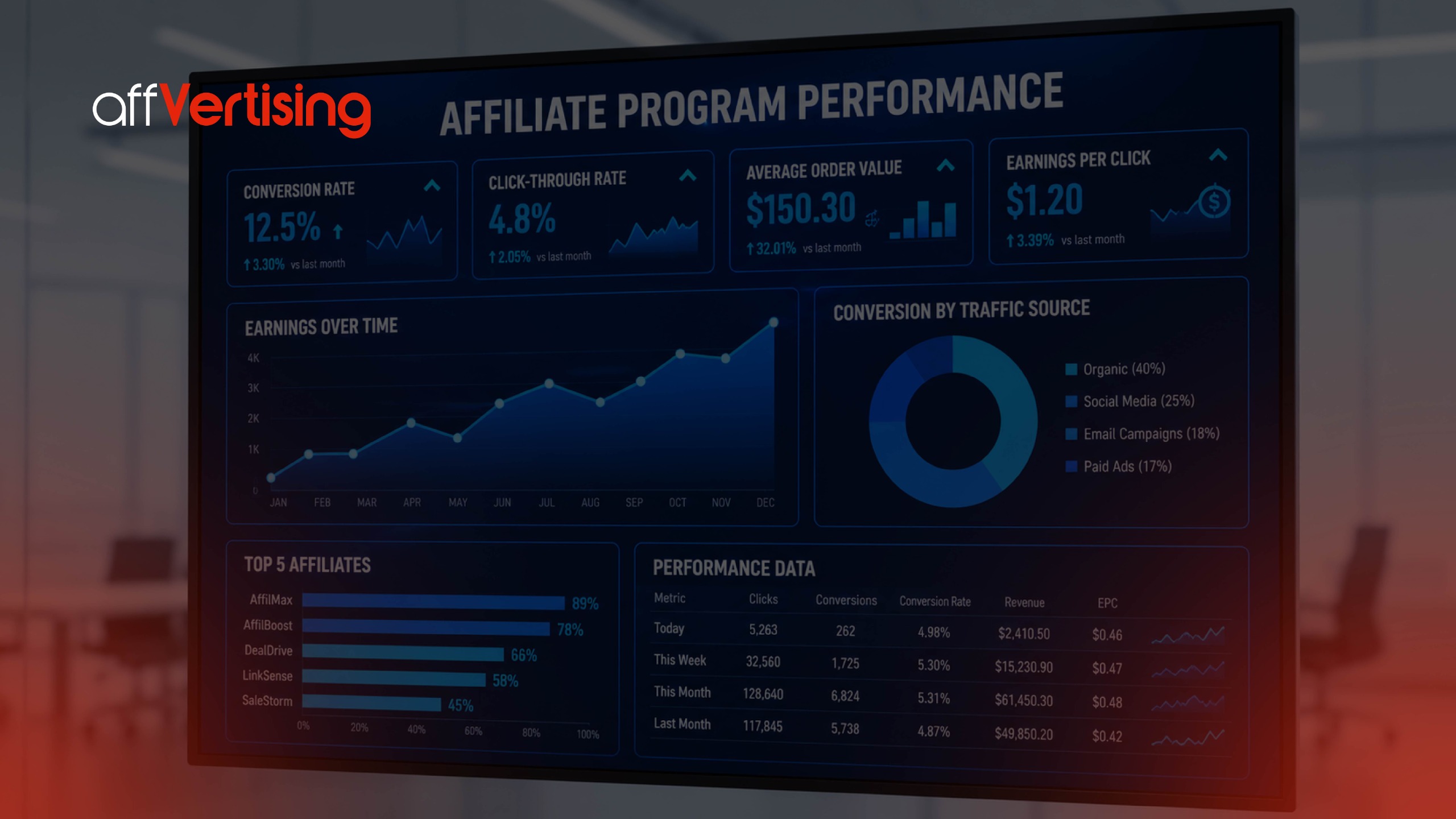
What Is a Good Conversion Rate for Affiliate Websites?
A good conversion rate for affiliate websites typically ranges between 1% and 5%, but top-performing sites often achieve 10% or more. Conversion rate measures the percentage of visitors who complete a desired action—such as clicking an affiliate link, signing up for an email, or making a purchase.
Why It Matters:
Even small improvements in conversion rate can drastically increase revenue without increasing traffic. For example, a 2% increase on 10,000 monthly visitors could mean 200 additional conversions, translating to a significant revenue boost.
Benchmark Table:
| Performance Level | Conversion Rate |
| Poor | < 1% |
| Average | 1% – 3% |
| Good | 3% – 5% |
| Excellent | 5% – 10%+ |
What Is the Average Conversion Rate in Affiliate Marketing in 2026?
Conversion rates vary by industry, funnel type, and traffic source. In 2026, the average affiliate conversion rate is 2%–4%, with top-performing sites exceeding 7–10% depending on niche and optimization.
Industry Benchmarks:
| Industry | Avg Conversion Rate |
| Finance | 2% – 5% |
| SaaS | 3% – 7% |
| eCommerce | 1% – 3% |
| Health | 2% – 6% |
| Technology | 2% – 4% |
Takeaway:
Understanding these benchmarks allows marketers to set realistic targets, identify gaps, and implement strategies that outperform average performance in their niche.
How Do Conversion Rate Benchmarks Vary by Affiliate Marketing Niche?
Conversion rates are highly niche-dependent, driven by user intent, offer type, and audience behavior.
| Niche Type | Conversion Rate | Behavior Insight |
| Finance & SaaS | 4% – 8% | High-intent, pre-qualified traffic |
| Health & Fitness | 2% – 5% | Research-intensive decisions |
| Lifestyle & Blogs | 0.5% – 2% | Passive browsing, low-intent |
Expert Insight:
High-intent niches can convert more with less traffic, while lifestyle and general content require stronger persuasion, structured funnels, and trust-building mechanisms.
How Does Traffic Source Impact Affiliate Conversion Rates?
Traffic source affects conversion because intent and engagement differ by channel:
| Traffic Source | Conversion Rate |
| Organic Search | 2% – 6% |
| Paid Ads | 1% – 4% |
| Email Marketing | 5% – 15% |
| Social Media | 0.5% – 2% |
- Organic search often delivers users with high intent.
- Email marketing brings pre-qualified audiences ready to act.
- Social media is effective for awareness but requires retargeting to drive conversions.
What Is the Typical Conversion Rate for Organic (SEO) Traffic?
Organic traffic conversion depends heavily on search intent:
| Keyword Type | Conversion Rate |
| Informational | 0.5% – 2% |
| Commercial | 2% – 5% |
| Transactional | 4% – 10% |
Example:
- Informational: “How does an electric toothbrush work?” → 0.5% – 2% conversion
- Transactional: “Buy Philips Sonicare electric toothbrush online” → 5% – 10% conversion
Actionable Tip:
Focus content on commercial and transactional keywords to maximize revenue potential without increasing traffic volume.
How Do Paid Traffic Campaigns Perform for Affiliate Websites?
Paid campaigns often have lower conversion rates compared to email or organic search, typically 1%–4%, depending on targeting precision, ad quality, and landing page design.
| Campaign Type | Conversion Rate |
| Search Ads | 2% – 5% |
| Display Ads | 0.5% – 2% |
| Retargeting Ads | 3% – 8% |
Insight:
Retargeting campaigns usually outperform cold traffic because users are already familiar with your brand or content. Optimized retargeting sequences can double or triple conversion rates compared to first-time visitors.
How Do Social Media Traffic Conversion Rates Compare?
Social media conversions are generally lower, ranging 0.5%–2%, as users are in a passive browsing mode.
| Platform | Conversion Rate |
| 1% – 3% | |
| 0.5% – 2% | |
| TikTok | 0.5% – 1.5% |
| 2% – 5% (B2B) |
Best Practice:
Use social media to generate top-of-funnel traffic and combine with email sequences or retargeting for higher conversions.
How Do Affiliate Funnel Types Influence Conversion Rates?
Different affiliate funnel structures impact conversion performance significantly. The right funnel guides users through a decision-making journey, increasing the likelihood of clicks and purchases.
| Funnel Type | Conversion Rate | Key Insight |
| Direct Linking | 0.5% – 2% | Quick traffic → low trust; works for highly targeted audiences |
| Review Page Funnel | 2% – 5% | In-depth reviews build authority and persuasion |
| Comparison Funnel | 3% – 7% | Simplifies choices; high-intent buyers convert faster |
| Email Funnel | 5% – 15% | Nurtured subscribers convert at the highest rates |
Best Practice:
- Multi-step funnels outperform direct links.
- Use comparison tables, pros/cons, and clear CTAs.
- Include email capture for retargeting and long-term nurturing.
What Is the Average Click-Through Rate (CTR) for Affiliate Links?
CTR measures how many users click your affiliate links out of total visitors. Higher CTR typically correlates with higher conversions, but intent and placement are key.
| Placement Type | CTR | Tip |
| In-content links | 2% – 5% | Embed naturally within valuable content |
| Buttons (CTA) | 5% – 15% | Use strong action words and contrasting colors |
| Comparison tables | 8% – 20% | Highlight best choices and visually guide clicks |
CTR Formula:
CTR (%) = (Clicks ÷ Impressions) × 100
Pro Tip:
Use heatmaps to optimize placement and ensure CTA visibility above the fold.
How Does Geo-Targeting Influence Affiliate Conversion Benchmarks?
Geo-targeting tailors content, offers, and pricing by location, improving relevance and conversions.
| Region | Conversion Rate |
| US, UK, CA | 3% – 7% |
| Asia, Middle East | 1.5% – 4% |
| Emerging Markets | 0.5% – 2% |
Why It Works:
- Localized content improves trust.
- Using local currency and language increases user comfort.
- Tailored promotions (e.g., region-specific discounts) boost conversions.
How Do Conversion Rates Differ by Device?
User behavior differs across devices, which impacts conversions.
| Device | Conversion Rate | Key Considerations |
| Desktop | 3% – 6% | Easier checkout; better for high-ticket purchases |
| Mobile | 1% – 4% | Requires fast-loading, mobile-optimized pages |
| Tablet | 2% – 5% | Often similar to desktop behavior; growing segment |
Pro Tip:
Prioritize mobile-first optimization, including responsive design, touch-friendly buttons, and simplified forms.
What Role Does Search Intent Play in Conversion Performance?
Understanding search intent is crucial for aligning content with user expectations:
| Search Intent | Conversion Rate |
| Informational | 0.5% – 2% |
| Commercial | 2% – 5% |
| Transactional | 4% – 10%+ |
Implementation Tip:
Create transactional-focused content (buying guides, product pages) to maximize conversion potential. Informational content should lead into commercial CTAs for nurturing.
What Are the Benchmarks for High-Ticket vs Low-Ticket Affiliate Offers?
The ticket size directly affects conversion rates:
| Offer Type | Price Range | Conversion Rate |
| Low-Ticket | <$50 | 3% – 10% |
| Mid-Ticket | $50–$200 | 2% – 5% |
| High-Ticket | $200+ | 0.5% – 3% |
Insight:
- High-ticket conversions require more trust, email nurturing, and retargeting.
- Low-ticket offers convert faster but require higher traffic for significant revenue.
What Factors Have the Biggest Impact on Conversion Rates?
Conversion performance is driven by multiple variables:
- Intent Alignment: Match content to buyer intent.
- Content Quality: Provide actionable, in-depth content.
- Trust Signals: Add testimonials, reviews, and expert recommendations.
- Page Speed & UX: Fast load times and intuitive navigation reduce drop-offs.
- Offer Relevance: Promote products that solve real problems.
- CTA Optimization: Strong, visible, and action-oriented buttons.
Pro Tip:
Improving even one factor can compound conversion performance significantly.
How Do Content Types Affect Conversions?
Content type impacts how users interact and decide:
| Content Type | Conversion Rate | Key Insight |
| Blog Posts | 0.5% – 2% | Awareness-focused; may need retargeting |
| Product Reviews | 2% – 5% | Builds authority and credibility |
| Comparison Pages | 3% – 8% | Simplifies decision-making; highest conversions |
Pro Strategy:
Use review and comparison content for high-intent buyers, supported by email follow-ups and retargeting campaigns.
How Do You Calculate Conversion Rate in Affiliate Marketing?
Formula:
Conversion Rate (%) = (Conversions ÷ Total Visitors) × 100
Example:
- Visitors = 1,000
- Conversions = 30
- Conversion Rate = 3%
Key Insight:
Even small increases in conversion (2% → 3%) can produce substantial revenue growth without additional traffic.
What Are the Most Common Reasons for Low Conversion Rates?
Affiliate sites often underperform due to:
- Targeting low-intent keywords
- Poor content structure or lack of depth
- Weak or unclear CTAs
- Slow page load speed
- Missing trust signals
- Promoting irrelevant or mismatched offers
- Lack of mobile optimization
Pro Tip:
Audit pages for intent alignment and user experience first—it’s the fastest path to improvement.
How Can You Improve Affiliate Conversion Rates Effectively?
Step-by-Step Optimization Framework:
- Intent Alignment: Focus on commercial or transactional keywords.
- Content Structuring: Use review tables, comparison charts, and bulleted pros/cons.
- Trust Building: Include testimonials, real examples, and data-driven claims.
- CTA Optimization: Action-driven buttons above the fold.
- UX Improvements: Improve page speed (<2 sec), simplify navigation, and make mobile-friendly.
What Tools Help Track and Optimize Affiliate Conversions?
Tracking tools provide actionable data to improve results:
| Tool Type | Purpose |
| Analytics Tools | Track traffic, conversions, and user behavior |
| Heatmaps | Analyze click patterns and scrolling behavior |
| A/B Testing Tools | Test variations of pages, CTAs, and layouts |
| Link Trackers | Monitor affiliate link performance |
Pro Tip:
Use tools like Google Analytics, Hotjar, and Pretty Links to identify bottlenecks and test solutions systematically.
What KPIs Should You Track for Affiliate Conversion Optimization?
Monitoring the right KPIs is essential for data-driven growth. Key metrics include:
| KPI | Purpose |
| Conversion Rate (%) | Measures the percentage of visitors completing a desired action |
| Click-Through Rate (CTR) | Evaluates link engagement effectiveness |
| Earnings Per Click (EPC) | Tracks revenue generated per click |
| Average Order Value (AOV) | Determines average revenue per conversion |
| Bounce Rate | Identifies pages where visitors leave prematurely |
EPC Formula:
EPC = Total Earnings ÷ Total Clicks
Pro Tip:
Regularly benchmark KPIs against industry standards to identify underperforming pages or funnels.
Real-World Examples of High-Converting Affiliate Websites
Example 1 – Review Site Funnel
- Traffic: 10,000/month
- Funnel: Product reviews + comparison tables
- Conversion Rate: 5%
- Sales: 500
Example 2 – Email Nurture Funnel
- Subscribers: 5,000
- Funnel: Educational email sequence → affiliate offer
- Conversion Rate: 10%
- Sales: 500
Key Takeaway:
High conversions result from intent-aligned content, structured funnels, and trust-building elements, not just traffic volume.
How Can You Use Data to Predict and Scale Conversions?
Predictive strategies rely on historical performance and traffic segmentation:
- Traffic Segmentation: Identify high-performing sources and focus optimization efforts there.
- Historical Conversion Patterns: Analyze which pages, keywords, or campaigns convert best.
- Forecasting Revenue: Multiply expected traffic by benchmark conversion rate and average EPC.
- Scaling Strategy: Prioritize high-intent traffic, refine content funnels, and expand top-performing campaigns.
Example:
- High-intent page receives 5,000 visits/month, conversion = 5%, EPC = $2 → Revenue = $500/month
- Doubling traffic with optimized CTA → Revenue doubles to $1,000/month
Advanced Strategies for Optimizing Affiliate Conversions
- AI-Powered Personalization: Dynamically adapt content based on user behavior, location, and device.
- Predictive Analytics: Forecast high-converting segments and prioritize them in campaigns.
- Voice Search Optimization: Optimize content for natural, question-based queries.
- Multi-Channel Retargeting: Combine email, social, and display to capture high-intent users.
- A/B and Multivariate Testing: Continually test page layouts, headlines, CTAs, and images.
Insight:
Combining data-driven strategies with behavioral insights ensures sustained growth in conversions.
Future Trends in Affiliate Conversion Optimization
- AI & Machine Learning: Automated personalization and predictive scoring.
- Mobile-First Commerce: Mobile traffic continues to dominate, requiring frictionless checkout.
- First-Party Data Strategies: Privacy regulations push marketers to rely on subscriber data.
- Voice and Visual Search: Optimizing for queries beyond typed search will be crucial.
- Interactive Content: Quizzes, calculators, and comparison tools drive higher engagement and trust.
Master Framework: Affiliate Conversion Optimization System
A structured, step-by-step framework for consistently improving conversions:
- Traffic Quality Optimization: Focus on high-intent sources.
- Intent Alignment: Match content to user search intent and stage in the funnel.
- Content Structuring: Use review pages, comparison charts, and structured CTAs.
- Trust Building: Testimonials, ratings, expert endorsements, and social proof.
- Offer Optimization: Relevant products with clear benefits and value propositions.
- UX & Speed Optimization: Mobile-first, fast-loading, and intuitive interfaces.
- Continuous Testing & Scaling: A/B testing, predictive analytics, and retargeting.
Implementation Checklist
Setup Phase:
- Identify high-intent keywords
- Choose profitable affiliate programs
- Build structured, intent-aligned content
Optimization Phase:
- Add strong CTAs and above-the-fold placements
- Improve site speed and mobile UX
- Implement tracking and analytics tools
Scaling Phase:
- Expand high-performing traffic sources
- Test and refine funnels continuously
- Leverage predictive analytics to identify growth opportunities
Expert Insight: Core Strategic Advantage
The real edge in affiliate marketing is optimizing conversions, not just traffic. Even modest improvements in conversion rates have exponential effects on revenue. By combining intent-aligned content, trust-building mechanisms, structured funnels, and data-driven testing, marketers create a defensible, scalable, and sustainable affiliate business.
High-performing affiliates understand that quality over quantity, precise optimization, and strategic segmentation drive long-term growth and profitability.
Frequently Asked Questions (FAQs)
What is a good conversion rate for affiliate websites?
A good conversion rate is typically between 1% and 5%, while optimized sites can achieve 5%–10% or higher depending on niche and funnel quality.
What is considered a high conversion rate in affiliate marketing?
Anything above 5% is considered strong, while 10%+ is exceptional and usually achieved through optimized funnels and high-intent traffic.
Why is my affiliate conversion rate low?
Common reasons include targeting low-intent keywords, poor content structure, weak CTAs, slow website speed, and lack of trust signals.
Which traffic source converts the best?
Email marketing typically converts the highest (5%–15%) because users are already engaged and pre-qualified.
Do high-ticket products have lower conversion rates?
Yes. High-ticket offers generally convert between 0.5%–3% due to higher purchase hesitation and longer decision cycles.